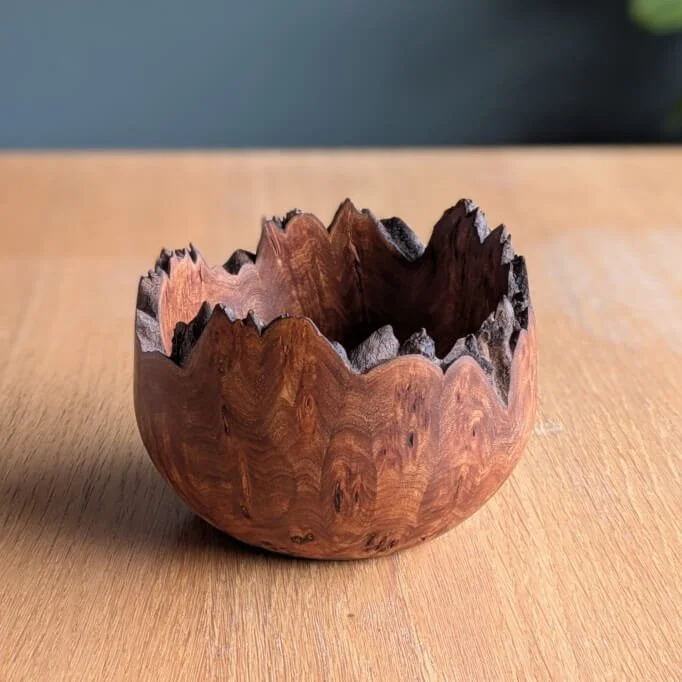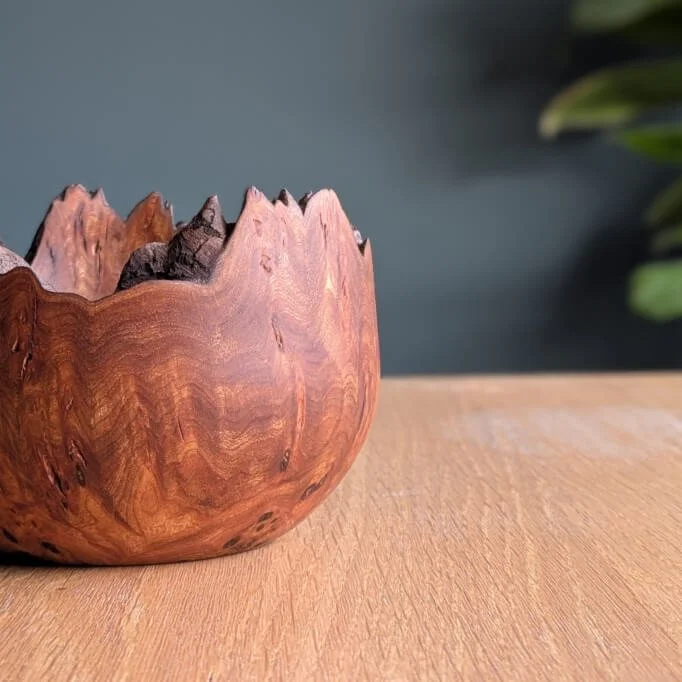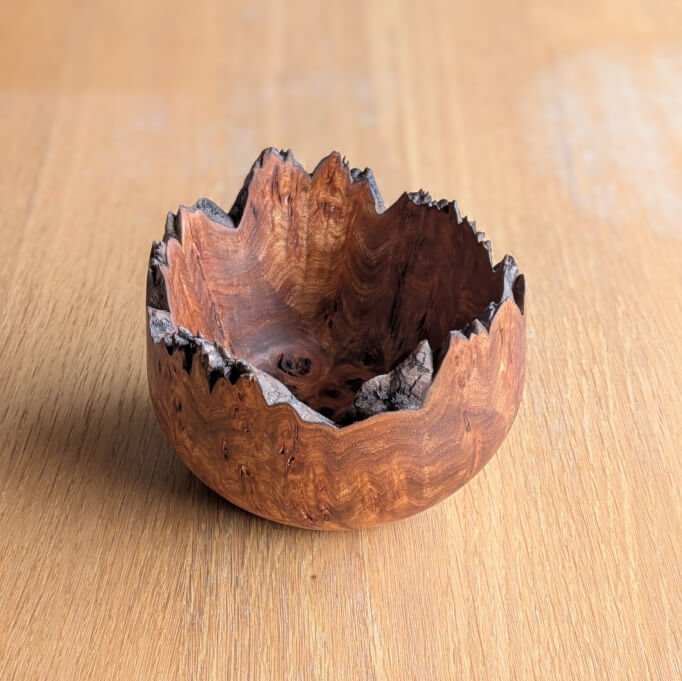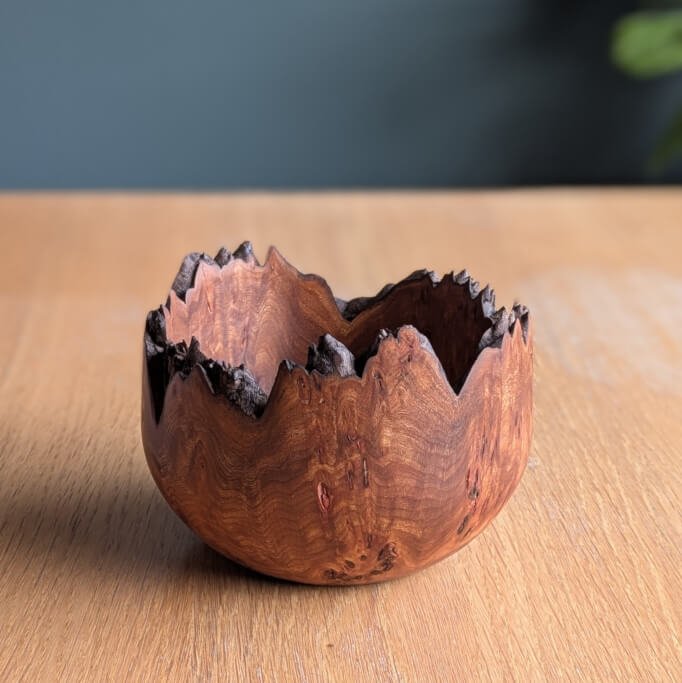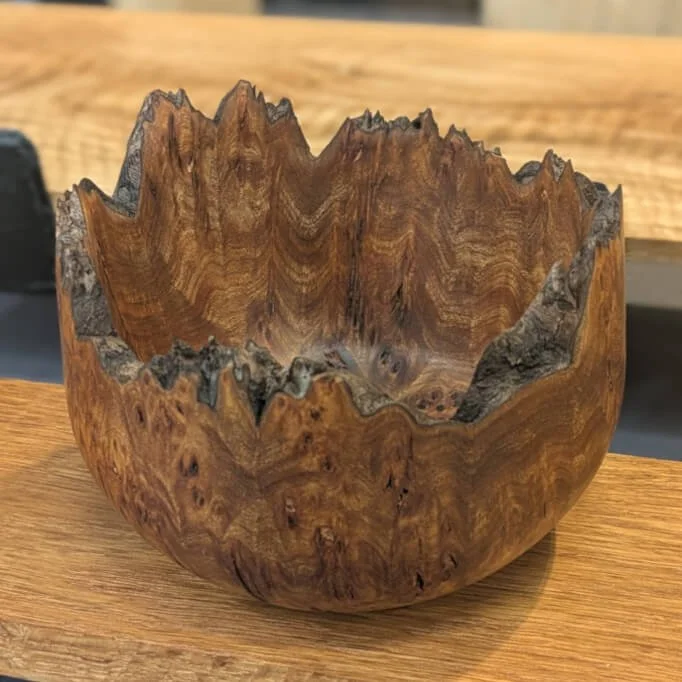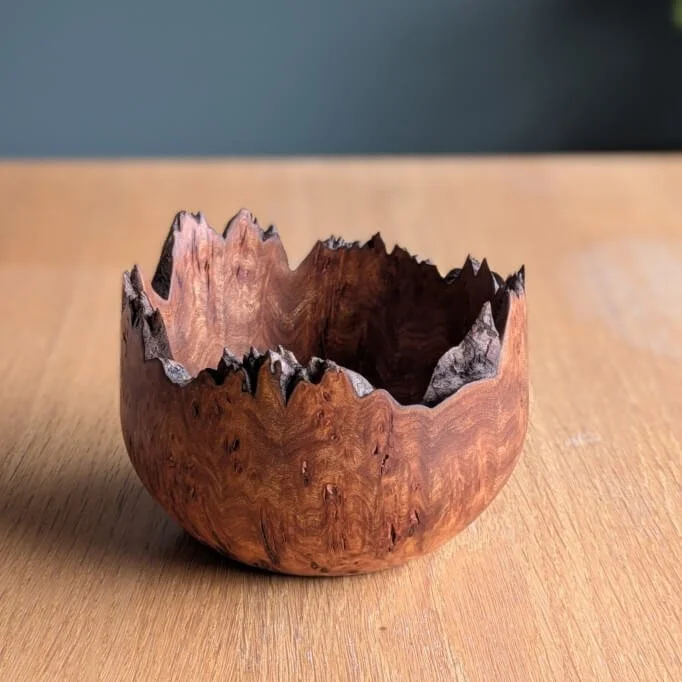
This vessel was turned from burr elm with the natural edge left in place, creating a more irregular rim that rises and falls around the opening. Each peak and dip follows the original outer edge of the wood, so the shape feels a little less predictable than a standard bowl.
The burr figuring runs right through the piece, with tight clusters, darker flecks, and shifting grain patterns typical of elm burr. Small voids and inclusions remain in places — a normal part of this kind of timber and something that adds to its character rather than being turned away.
The interior follows the same form as the rim, creating a slightly deeper, sculptural feel while still keeping the overall shape grounded and simple.
This vessel was turned from burr elm with the natural edge left in place, creating a more irregular rim that rises and falls around the opening. Each peak and dip follows the original outer edge of the wood, so the shape feels a little less predictable than a standard bowl.
The burr figuring runs right through the piece, with tight clusters, darker flecks, and shifting grain patterns typical of elm burr. Small voids and inclusions remain in places — a normal part of this kind of timber and something that adds to its character rather than being turned away.
The interior follows the same form as the rim, creating a slightly deeper, sculptural feel while still keeping the overall shape grounded and simple.