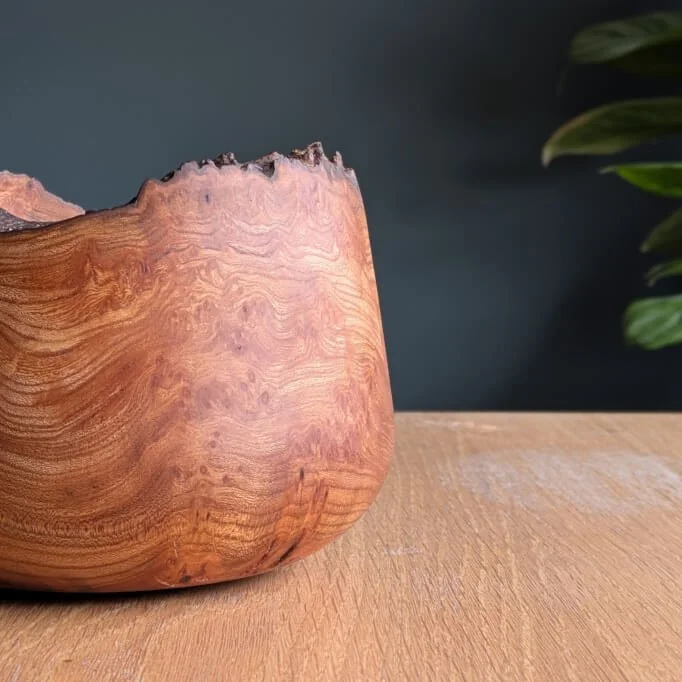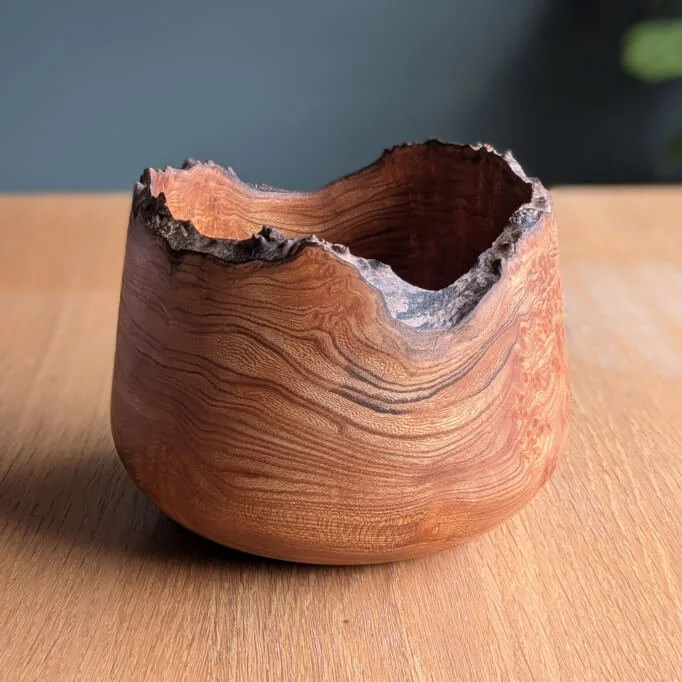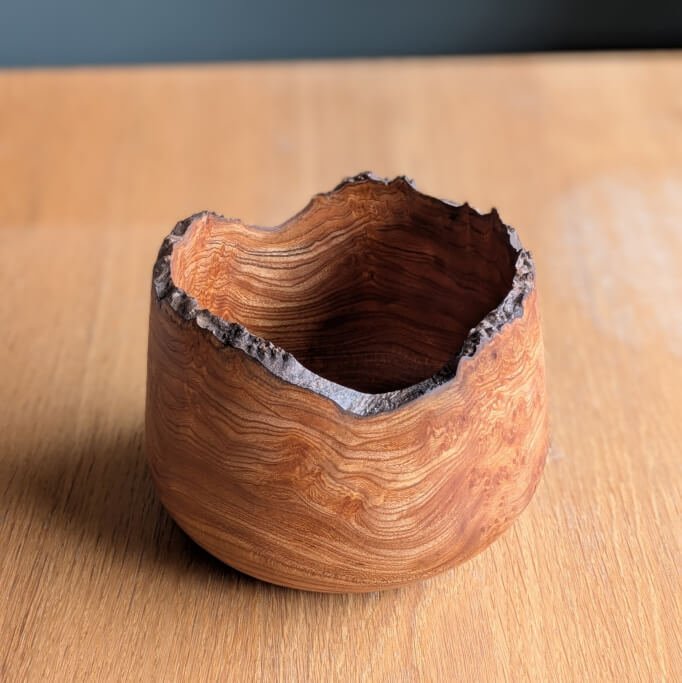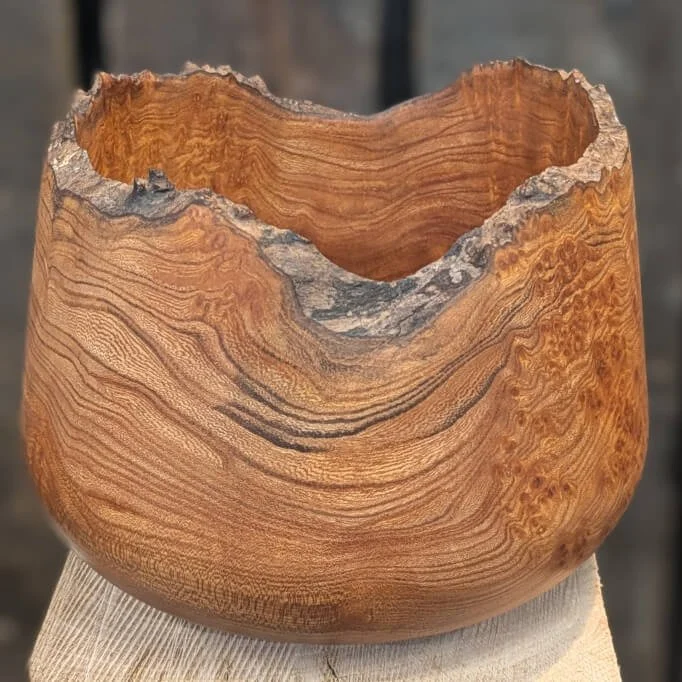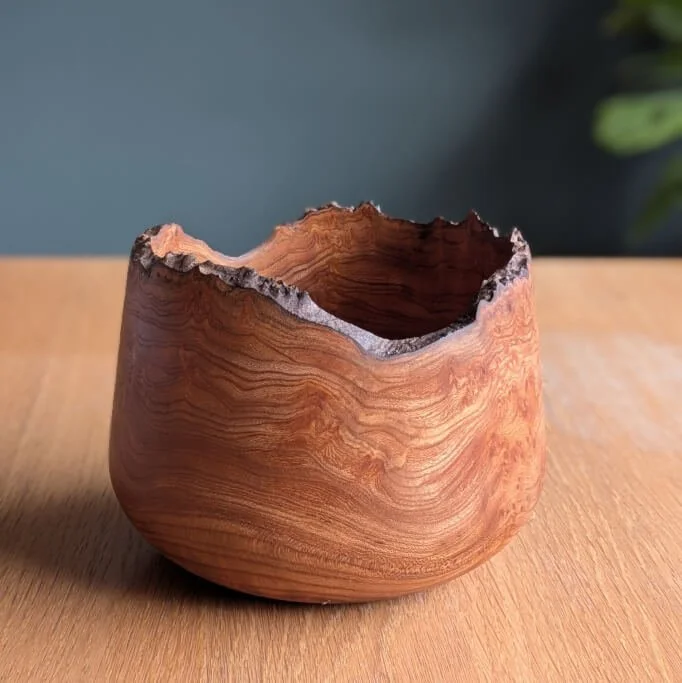
Burr elm is known for its tight, swirling grain, and this piece shows it well. The surface is full of movement – small ripples and darker lines that run right around the vessel and shift slightly as the light changes.
The form is kept simple to let the timber speak for itself. The rim follows the natural edge of the blank, rising and dipping slightly rather than being perfectly even.
A darker band runs through the upper edge where bark once met the wood, left in place as part of the piece rather than turned away.
Burr elm is known for its tight, swirling grain, and this piece shows it well. The surface is full of movement – small ripples and darker lines that run right around the vessel and shift slightly as the light changes.
The form is kept simple to let the timber speak for itself. The rim follows the natural edge of the blank, rising and dipping slightly rather than being perfectly even.
A darker band runs through the upper edge where bark once met the wood, left in place as part of the piece rather than turned away.