Sycamore vs. Ash: Which is Best for Bowls?
When choosing a new wooden bowl - for either serving or simply a nice piece of decor to display - the wood it is made from can make a lot of difference.
Sycamore and Ash are two excellent British hardwoods that are very popular choices amongst bowl turners.
Both of these species are light in colour - and from a turner’s point of view - relatively easy to work with.
However, they do have some distinct characteristics that make them suited to different purposes.
Why Choose A Sycamore or Ash Bowl?
These two British hardwoods offer sustainability, character, and durability.
Sycamore and ash have been used in furniture and woodturning for centuries.
Whether you are seeking some that delivers a smooth, pale look or one with a striking grain pattern - choosing locally sourced wood supports British forests and is often a make of good craftsmanship.
What Sets Sycamore and Ash Apart?
Sycamore and ash both offer strength and beauty.
But their unique characteristics influence their appearance and usage.
Sycamore is a pale, fine-grained hardwood. That finishes to a smooth texture well. It has a subtle, understated grain. This gives it an elegant and refined look.
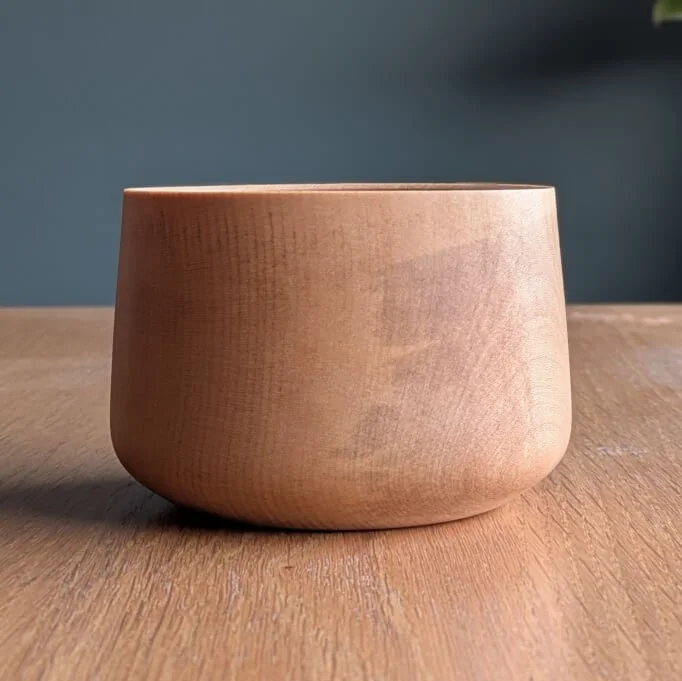
This small bowl is turned from pale Scottish sycamore, with a softly curved form.
The clean lines allow the natural beauty of the wood to shine through, from the gentle sheen to the subtle grain that shifts across the surface.
Finished with a food-safe hard wax and oil blend, the surface is smooth and durable - equally suited for serving dry foods or as a simple, calming presence on a shelf or table.
Hand-turned in my small workshop — each piece shaped slowly, one at a time.
Ash is an open-grained hardwood. Boasting a more defined grain pattern. It can have a slightly darker hue than sycamore. And you will often see it with a wavy or figured grain.
Comparing Sycamore and Ash Bowls
| Feature | Sycamore Bowl | Ash Bowl |
|---|---|---|
| Grain Pattern | Fine, subtle grain | Open grain, bold texture |
| Colour | Creamy white, pale yellow | Light beige to pale brown |
| Hardness | Medium-hard, durable | Slightly harder, strong |
| Weight | Light to medium | Lightweight, easy to handle |
| Workability | Very easy to turn and carve | Easy to shape and turn |
| Moisture Resistance | Fairly resistant to moisture | More susceptible to moisture damage |
| Best Use | Kitchen bowls, decorative pieces | Decorative bowls, everyday use |
A hand-turned sycamore bowl has a smooth, refined look. With a creamy white colour. This makes it ideal for contemporary interiors or kitchen use.
An ash bowl, on the other hand, has a more defined grain. With a natural warmth that suits rustic and modern styles alike.
Which One Should You Choose?
If you want a bowl that is light in colour, smooth, and elegant, sycamore is the best choice. It’s often used for food-safe bowls, chopping boards, and decorative pieces where a clean aesthetic is preferred.
If you prefer a bowl with a bold grain and a more natural, rustic appearance, ash is the better option. Its strong, open grain adds character, making it ideal for statement pieces and everyday use.
Choosing a bowl made from sycamore or ash isn’t just about the species of wood. You should also take into account the beauty and sustainability of native hardwoods. Whilst shopping local, supporting local businesses and backing traditional crafts.