
Buy Oak Bowls Online
Latest Oak Bowls
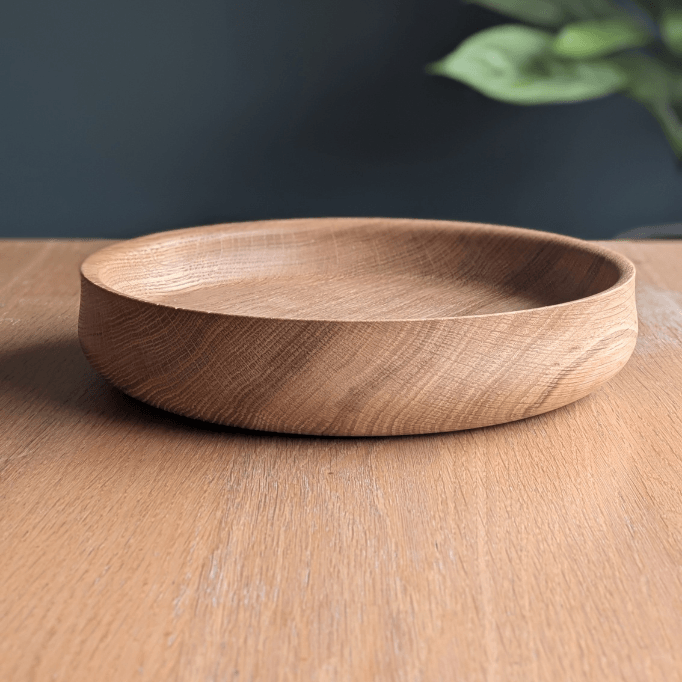
Oak Bowls For Sale
Oak is the wood I come back to most. It's hard, it lasts, and it has a quiet figure to it.
Every piece on this page is turned from a single block of oak, and every one is different. The grain in one board never repeats in the next, so the bowl in the photographs is the bowl you'll get.
Oak bowls take dry food and everyday clutter equally well. Fruit and bread on the table, nuts and snacks, or all the small things that need somewhere to go. Be that keys and change by the door, jewellery on a bedside table, or treasures in a child’s room.
They also age well, which is the real argument for oak over anything else. The colour deepens over the years and the surface picks up a history of its own.
Crafting Wooden Bowls
In my workshop in Midlothian, I take great care in selecting British hardwoods to create every wooden bowl on the lathe. Hardwood is the perfect choice for bowls due to its density and durability, making it resistant to wear and tear. This density also contributes to the longevity and aesthetic appeal of the bowls, as hardwoods offer a beautiful finish with rich and varied grain patterns.
I often choose hardwoods such as oak, cherry, and beech for their robustness and the depth of character they bring to the finished product.
Frequently Asked Questions
-
Yes. Every bowl is finished with a food safe hard wax oil blend. They're made for dry food — fruit, bread, nuts, snacks and the like. I wouldn't use one for soup, dressings or anything that sits wet in it, as standing liquid is hard on any wooden bowl.
-
No, and it's the one thing that will ruin a wooden bowl quickly. The heat and the long soak lift the grain and can split the wood. Wipe or wash by hand and dry it straight away.
-
Wash by hand, dry it immediately rather than leaving it on the drainer, and keep it out of direct sunlight and off radiators. To increase longevity, you can, once or twice a year, wipe on a food safe oil or wax and buff it off.
-
Because they came out of a tree. Knots, colour shifts and shadowing are natural features of solid wood, not faults. Where a piece has one I photograph it and say so in the description, and I only sell pieces where the feature is sound and doesn't affect how the bowl is used.
-
Timber is dried before it's turned, which does most of the work of preventing it. After that, how it's kept matters more than the wood: away from radiators, out of strong direct sun, and not left standing wet. Solid wood does move slightly with the seasons, and that's normal.
-
Bowls around 14cm across suit a bedside table or hallway — keys, rings, odds and ends. Something in the low twenties works as a table centrepiece for fruit or bread. Every listing gives the diameter and height.
-
Yes, a wooden bowl is a nice and practical way to display small plants.
Oak is the hardest and heaviest of the three, warm brown, with fine silver flecking through the grain. Ash is much paler with a bolder, more open grain. Spalted beech carries the dark ink-like lines left by fungus in the standing timber, so it's the most dramatic of the three.
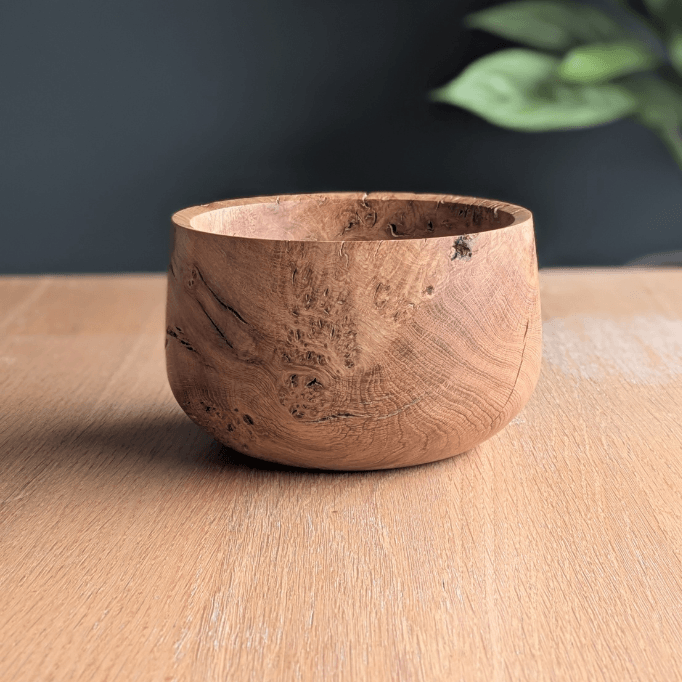
This bowl is turned from Scottish oak sourced from Pitlochry, featuring areas of burr that bring rich texture and character to the form.
The clean, rounded shape allows the natural qualities of the wood to take centre stage - from the warm tones to the swirling grain and small clusters of figuring.
Finished with a food-safe hard wax and oil blend, the surface is smooth and durable.
Hand-turned in my small workshop, each bowl made slowly, one at a time.